
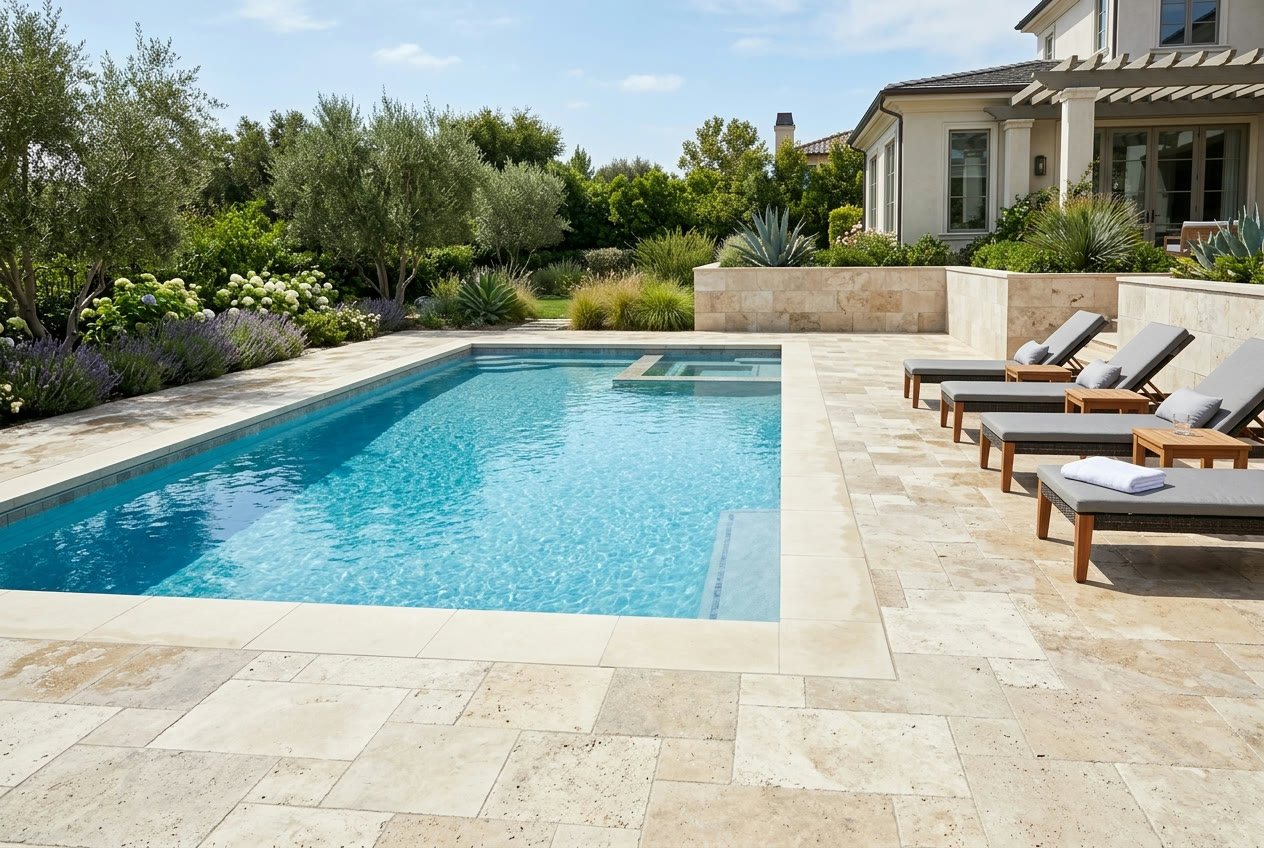
Travertine stays the coolest of any patio material we lay, by a wide enough margin that most people notice it the first afternoon. Light-colored pavers and flagstone come in second. Plain gray concrete, dark pavers, and brick get hot enough by early afternoon that bare feet won't stay on them long. If you're planning a patio or pool deck for an East Texas summer, the material you pick matters as much as the design.
Why This Question Comes Up Every July
By the time August rolls around, most East Texas homeowners have already found out the hard way which parts of their yard turn into a griddle. Concrete slabs radiate heat back up at you for hours after the sun moves off them. Standard pavers do the same thing, just a little slower. If you're building a patio or an outdoor kitchen and you plan to actually use it in shorts and bare feet from May through September, the surface underfoot decides whether that happens.
Travertine: The Material Everyone Ends Up Asking About
Travertine is a natural limestone with a porous structure that lets heat move through it instead of sitting on the surface. Where a concrete slab can climb well past what's comfortable to touch on a sunny afternoon, travertine in the same spot stays noticeably cooler. It's the material we point most clients toward for pool decks and outdoor kitchen floors, because those are the two spots where people are barefoot the longest.
It's not free. Travertine runs more per square foot than poured concrete and more than basic pavers. It's also a softer stone than granite or dense flagstone, so it wants a good sealer and a proper base underneath to handle years of Texas storms without pitting. Set right, on a compacted and well-drained base, it holds up fine here.
Flagstone and Other Natural Stone
Flagstone splits the difference. It runs cooler than concrete or dark pavers, especially in lighter tones like buff and tan, but it doesn't match travertine's ability to shed heat. It's a strong choice for walkways, borders around a retaining wall or flowerbed, and patios where people are moving through rather than standing barefoot for an hour. Flagstone is also one of the toughest surfaces we install, and it ages well against freeze-thaw cycles.
Pavers and Brick
Pavers are the most flexible material on cost and color, and that flexibility cuts both ways on heat. A light sand or gray paver stays reasonably comfortable. A charcoal or brown paver, the colors a lot of homeowners like for how they photograph, will run noticeably hotter in the same sun. Brick behaves similarly. It looks sharp against a brick home, but it absorbs heat and holds it, which makes it a better fit for a front walkway than a pool deck or a spot where kids are running around barefoot all afternoon.
Color Changes the Math, But Not the Ranking
Within any material, lighter colors stay noticeably cooler than dark ones on the surface. That's real, and it's worth choosing light finishes if you're set on concrete or a darker paver line. But color doesn't override material. A light gray paver still runs hotter than travertine of any shade, because the stone itself decides how fast heat builds and releases, and color only shifts that a little. If staying cool matters most, pick the material first and the color second.
What We Recommend Around Outdoor Kitchens and Pool Decks
For clients building an outdoor kitchen or a pool surround, we usually steer the conversation toward travertine or a light natural stone for the areas people stand and walk barefoot, and let budget-friendlier pavers or flagstone handle the surrounding patio and paths. That split keeps the cost from ballooning while putting the better material where it actually earns its keep. At Lake Fork, where weekend homes get used hardest on the hottest days of the year, this split matters even more than it does on a shadier in-town lot.
What It Costs to Go Cooler
Travertine costs more than poured concrete and more than most standard pavers, and it's worth pricing both ways before you commit. On a smaller pool deck or kitchen floor, the difference is usually manageable, especially once you factor in that you're not repouring a cracked slab in ten years. On a large open patio, mixing materials, travertine where feet land, flagstone or pavers around it, often gets you the comfort where it counts without paying stone prices for square footage that's mostly for looks. We walk every client through both options and give a written price for whichever direction you pick, same as we do for our covered versus open outdoor kitchen guide.
Ask Before You Pour
If you're already leaning toward concrete or standard pavers for budget reasons, that's a fair call, and there are ways to keep it cooler with color and shade. But if bare feet in July is the whole point of the patio, it's worth having the travertine conversation before the forms go in, not after the first hot afternoon. We'll walk your yard, talk through what fits the layout and the budget, and give you a written estimate with no pressure either way.
| Material | Heat on bare feet | Best use |
|---|---|---|
| Travertine | Stays coolest, even in direct sun | Pool decks, outdoor kitchen floors |
| Light flagstone | Warm, tolerable barefoot | Patios, walkways, borders |
| Light pavers | Warm to hot by midafternoon | General patios, driveways |
| Dark pavers, brick, plain concrete | Hot, uncomfortable barefoot | Walkways, shaded areas |