
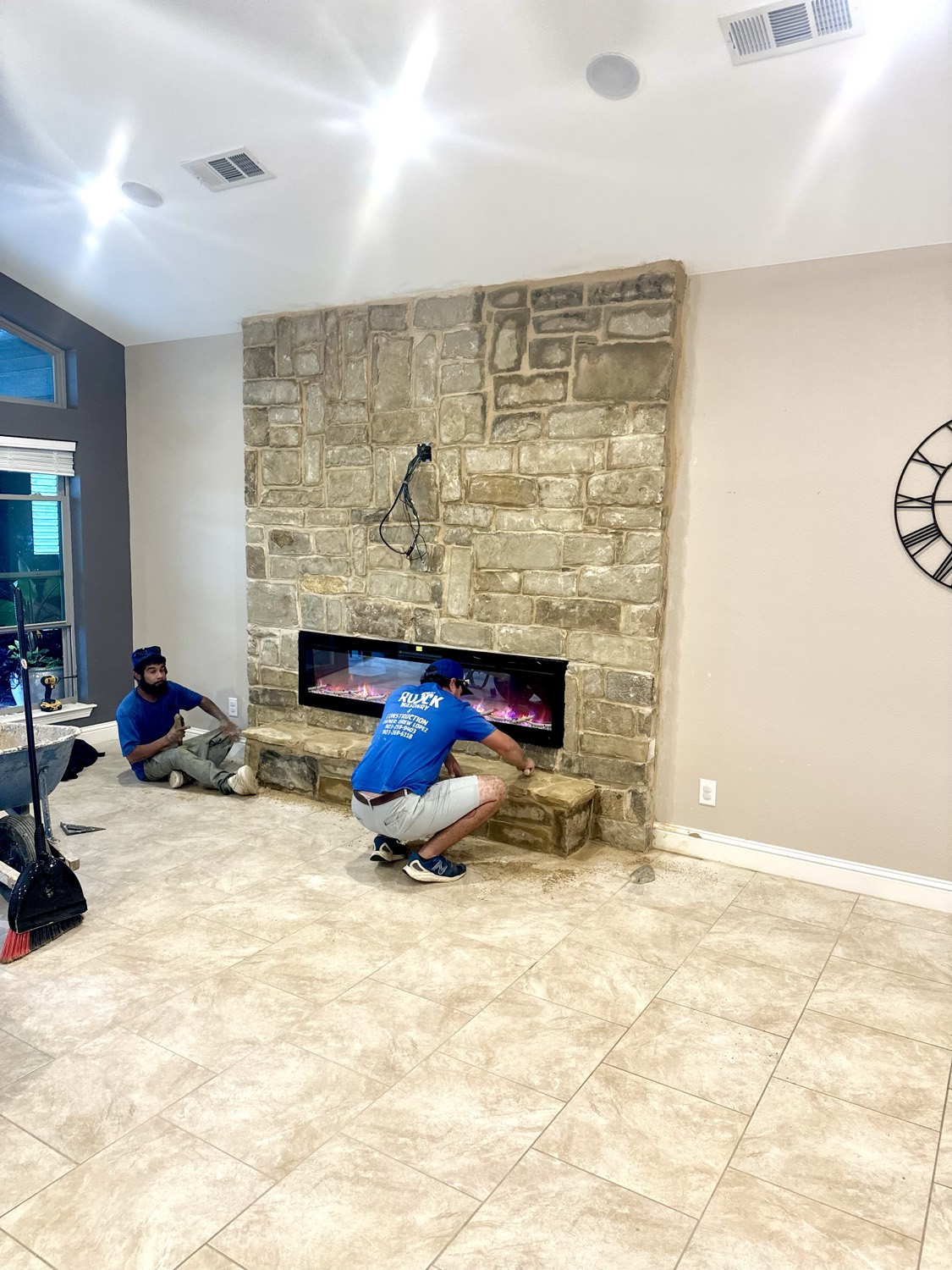
Choosing a masonry contractor in East Texas comes down to a handful of things you can check before you sign anything: local experience with our clay and weather, a written estimate, one crew that stays with the job start to finish, insurance you can verify, and real work you can go look at. Skip a company missing more than one of those, no matter how good the price sounds on the phone.
Start With Where They're Actually From
A lot of the masonry trucks working East Texas right now aren't from East Texas. Bigger crews out of Dallas and Fort Worth will drive out for a large outdoor kitchen or a full house veneer, then head back to the metro once it's done, and nobody local is close by a year later when a joint cracks or a wall settles a little. Ask straight out where the company is based and how many jobs they've done in your county. A contractor who's worked across Rains, Wood, Hopkins, and Van Zandt counties already knows how our clay swells in the wet months and dries out come summer, and has priced that movement into how they set footings and stone. If you're comparing bids around Canton or anywhere in Van Zandt County, ask each contractor how often they're actually out this way, since anyone will say yes when they want the job.
Get the Scope and Price in Writing
A number given over the phone isn't an estimate. It's a guess, and guesses have a way of growing once the trucks show up. A real estimate spells out what's being built, what materials are going into it, roughly how long it will take, the payment schedule, and what isn't included, so a change halfway through doesn't turn into a surprise line item. If a contractor won't put a price in writing before starting, or the number keeps shifting every time you talk, pause before you sign anything.
Ask Who's Actually Swinging the Trowel
Some companies sell the job, then hand the stonework to whichever crew is free that week, so the people on site Monday might not be back Thursday, and whoever walked your yard and gave the quote may never touch a trowel on your property. Ask directly: is the crew that gives the estimate the same crew doing the work? One crew that stays start to finish tends to build more consistently, because the same hands are laying stone on day one and day ten, and there's one person to call later instead of a company pointing at a subcontractor who already moved on.
Check Insurance and Real Masonry Experience
Ask for proof of insurance and don't feel awkward about it. If someone gets hurt on your property and the contractor isn't covered, that liability can land on you, and a legitimate company hands over a certificate without a fuss. Ask about years in business too, but specifically in masonry, not construction in general. A remodeling company that occasionally builds a patio isn't the same as a crew whose main trade is setting stone and laying brick and has watched what East Texas freeze-thaw nights and heavy spring rain actually do to a wall over time.
Look at Real, Finished Work
Anyone can put good photos on a website. Ask to see finished work near you, ideally something close to what you're planning, and ask if you can drive by or call the homeowner. A contractor proud of their work hands over addresses without blinking. This matters even more on repair jobs, where matching new brick or stone to an existing wall separates a good mason from an average one. Our masonry repair crew gets called constantly to fix a patch job left behind by someone who never bothered to match color, texture, or joint style.
Why Three Bids Come Back Three Different Numbers
Get bids from more than one contractor and the prices will rarely land close together. That's normal, and it doesn't automatically mean the low bid is the deal or the high bid is padded. The gap usually comes down to scope: one contractor might dig a proper base, compact it, and build in drainage, while another skips most of that and sets stone on whatever is already there. Materials vary too, since manufactured stone, natural stone, and different brick grades all carry different price points before labor even enters the picture. Retaining walls make this especially obvious, since a wall without proper drainage behind it can look identical to a well-built one on the day it's finished, then start failing within a year or two. Our retaining wall guide breaks down what should actually be in a wall estimate. The same logic holds for any retaining wall or flowerbed project: ask each contractor to break their number into labor, materials, and site prep.
| Line Item | Thorough Bid | Corner-Cutting Bid |
|---|---|---|
| Excavation and base | Dug out and compacted before building starts | Skipped or minimal, built on existing ground |
| Drainage | Gravel backfill and drain pipe where the job needs it | Left out entirely, or "we'll see if it's needed" |
| Materials | Named by type and grade in writing | Listed vaguely as "stone" or "brick" |
| Cleanup | Included in the price | Extra charge, or left for the homeowner |
Questions Worth Asking Before You Sign
Print this list or keep it on your phone for the walkthrough:
- Is the crew that quoted my job the same crew that will build it?
- Can I see a finished project near me, and can I call that homeowner?
- What's included in the price, and what would cost extra?
- Do you carry liability insurance, and can you send proof?
- How long have you been doing masonry specifically?
- What's the payment schedule, and is anything due before work starts?
We're a local, family-owned crew based in Emory, and the people who walk your yard for the estimate are the same people setting stone on the job. We give free written estimates across Emory, Lake Fork, Sulphur Springs, Canton, Quitman, Winnsboro, Mineola, and the rest of Rains, Wood, Hopkins, and Van Zandt counties. Read more on our about page, or request a free estimate and ask us any of the questions above.